


Netflix
Netflix, Inc.
I have always thought of Netflix as an app that reveals its strengths most clearly when my internet connection is doing its job. It is a free app to install, but the viewing service itself is built around a subscription, so the real question is not simply whether it costs anything to download. The better question is whether its way of delivering television episodes and movies fits your connection, your routine, and the amount of control you want over what you watch.
Developed by Netflix, Inc., this entertainment app has become familiar on both Android and iOS. Its scale is reflected in more than a billion installs, while its average rating sits at 3.9 from roughly 15 million ratings. Those figures suggest something important: the app is widely used, but popularity does not make every viewing situation smooth. In my experience, the quality of the experience depends heavily on the network around me and on how patiently I manage the app when that network changes.
How Netflix feels when the connection is strong, weak, or changing
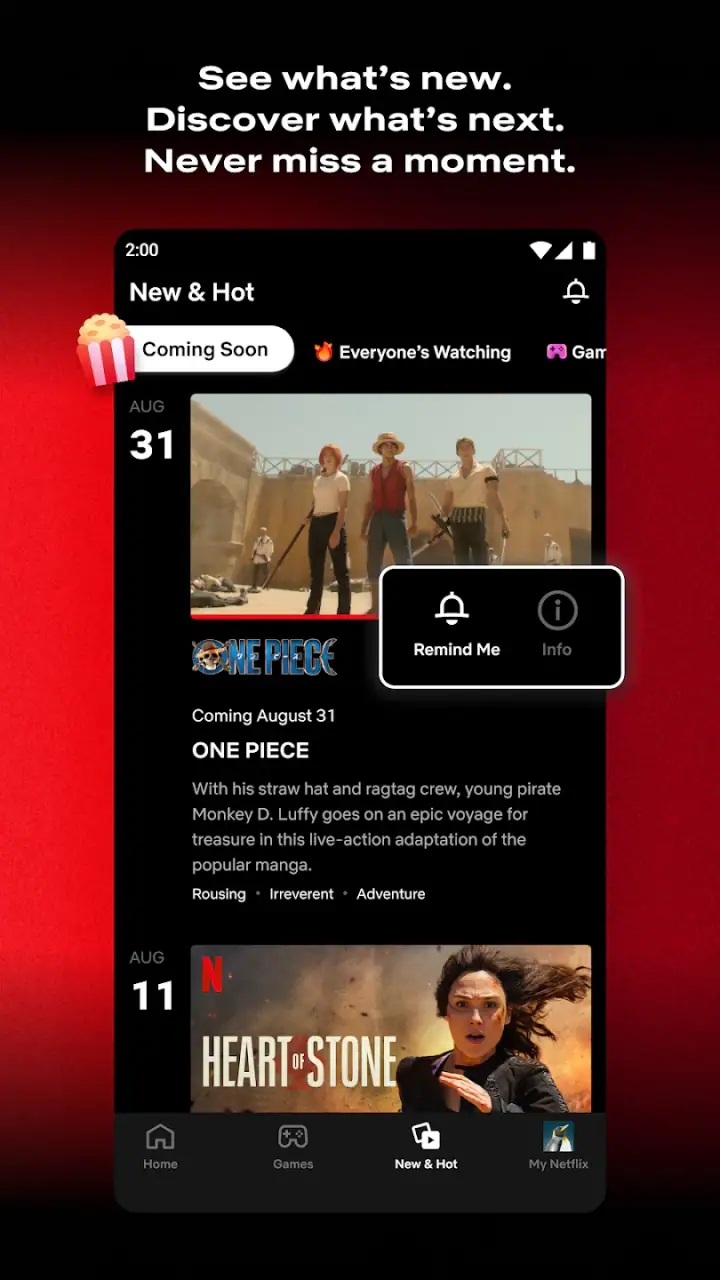
With a reliable connection, Netflix is pleasantly direct. I open it, browse through rows of shows and films, choose something, and start watching without having to build a complicated media library first. That simplicity is one of its strongest qualities. It works well when I already know what I want, but it also gives me a comfortable way to browse when I only have a vague idea of the mood I am after.
Related News

How Netflix's Mobile App Keeps Users Hooked

Solar Smash: Unleashing Cosmic Power in Mobile Culture

Why ReelShort - Stream Drama & TV is Disrupting Streaming Giants
The network becomes part of the experience almost immediately. A stable home connection makes the app feel calm and predictable, especially for a long episode or film. On a crowded public network, however, the same app can feel less dependable. Starting playback may take longer, picture quality may change, or a stream may pause at an inconvenient moment. I do not see this as a flaw unique to Netflix, but it matters because the service is designed around immediate access rather than a collection of files already sitting on the device.
That distinction is especially important for anyone who expects entertainment to work in places with uncertain reception. A train journey, a lift between buildings, an underground station, or a hotel room with overloaded Wi-Fi can turn a simple viewing plan into a test of patience. I would not choose Netflix as my only entertainment plan for a trip unless I had already checked the viewing options available to me and prepared accordingly.
Related News

Why WhatsApp Messenger Still Makes Everyday Communication Feel Easy

Jurassic World: The Game Is the Better Dino Tycoon for Strategic Players

Threads in Real Life: Who Should Join, Lurk, or Leave

How SHEIN Turned Shopping Into an Endless Content Feed

How to Make Fortnite Feel Smarter on Mobile

Should You Switch to Microsoft Outlook on Mobile?
At home, the service is much easier to recommend. A good wireless connection lets me move from browsing to watching with very little friction. I can use it for a single episode after dinner, a longer film at the weekend, or background viewing while doing something less demanding. The app does not require me to understand technical settings before I can enjoy it, which is a real advantage for households where different people have different levels of confidence with technology.
Why network changes affect more than playback
Connectivity influences browsing as well as streaming. When the connection is slow, artwork and content rows can take longer to appear, and the whole catalogue can feel less responsive. That may sound minor, but it changes how I choose. Instead of exploring, I tend to select the first familiar title I see. On a fast connection, I am more willing to look through categories and recommendations because the app responds quickly enough to support casual discovery.
This creates a subtle trade-off. Netflix is convenient when I want a quick decision, but its convenience is partly dependent on the network making the interface feel immediate. If the connection is unstable, I prefer to decide what to watch before I am in the most difficult location. That small habit saves frustration and prevents me from spending the first part of a journey repeatedly refreshing a catalogue.
Gallery
There is also a social side to this. In a shared home, several people may be using the same connection for calls, games, work, or other video services. Netflix cannot control that environment. If the household connection is under pressure, the app may feel inconsistent even though the phone itself is working perfectly. For families and shared flats, I recommend treating network capacity as part of the viewing setup rather than blaming the app for every interruption.
Using it on phones and tablets
Netflix makes the most sense on a mobile device when the screen is being used for a deliberate viewing session rather than as a replacement for a television in every situation. I enjoy watching on a tablet because the larger display makes subtitles, facial expressions, and darker scenes easier to follow. A phone is more practical for short sessions, waiting rooms, or a quiet break, but the smaller screen makes me less interested in visually dense films.
Touch controls are easy enough for ordinary use, although a phone can make accidental taps more likely when I am holding it one-handed. I prefer to begin playback before settling into a position where I will not keep touching the screen. This sounds obvious, but it matters during travel, when the device may be resting against a bag or held at an awkward angle.
A realistic everyday example is a late commute after work. If I have a dependable mobile connection, I can use the journey to watch part of an episode and continue later. If reception drops repeatedly, that same plan becomes irritating because the breaks interrupt the story and make the session feel fragmented. In that situation, I would rather use a service or media setup that gives me more certainty about local playback than rely entirely on a live connection.
People who watch while travelling should also think about the physical environment. Bright outdoor light can make a phone screen harder to read, while headphones may be essential in public spaces. Netflix can supply the content, but it cannot solve poor visibility, weak battery life, or the distractions of a crowded carriage. I find it works best on mobile when I choose a realistic viewing window instead of assuming every spare minute will become a comfortable cinema-like session.
What happens when streaming fails
The most useful way to judge a streaming app is not only by how it behaves when everything is perfect. I pay attention to what happens after a pause, a connection change, or an interrupted session. Netflix is easy to return to when the app and network recover, but the experience can still lose momentum if playback stops at the wrong point. For a dramatic episode, even a short interruption can be more annoying than it would be during light entertainment.
My practical recovery routine is simple. I first check whether the problem affects only Netflix or the whole connection. If other apps are also struggling, restarting the stream repeatedly usually wastes time. I wait for the connection to settle, then try again. If the issue is limited to Netflix, closing and reopening the app can be more useful than tapping the play control over and over. I also avoid switching between several demanding apps while trying to resume a stream, particularly on a phone with limited remaining battery.
One overlooked point is that recovery is easier when I remember where I stopped. If a connection fails during a tense scene, I give the app a moment to catch up rather than immediately jumping around the timeline. Repeatedly dragging through a video on a weak connection can create more loading than simply allowing playback to restart. This is a small workflow improvement, but it makes unreliable networks feel less disruptive.
Netflix is not the best match for someone who needs guaranteed continuity. A person working in areas with inconsistent reception, or someone who regularly travels through dead zones, may prefer locally stored media or a platform whose offline workflow is central to their routine. The important point is not that Netflix is unusable away from strong Wi-Fi; it is that connectivity is part of the product experience, not a background detail I can always ignore.
Being careful with mobile data
Watching over mobile data requires more thought than watching at home. A long film can consume a meaningful part of a user’s allowance, and repeated browsing can add to the overall use even before playback begins. I avoid starting a lengthy viewing session on cellular data unless I know what my plan can comfortably handle. This is particularly important when travelling internationally, where network arrangements can make casual streaming an expensive habit.
My preferred approach is to use Wi-Fi for browsing and longer sessions whenever possible. I also avoid letting Netflix run while I am only half watching, because background viewing is an easy way to use data without receiving much value from it. If I am watching on a phone, I keep the session intentional: choose the title, watch it, and stop the stream when I am finished rather than leaving the app active while I move on to another task.
Families should discuss this before handing a phone or tablet to a child. The content rating is Teen, so parents still need to consider whether the service and particular titles suit the young person using it. A child watching over a shared mobile connection may also create an unexpected data problem. I would set clear household expectations about where streaming is allowed and who is responsible for checking the connection.
The free installation can make Netflix appear similar to a free video app at first glance, but that comparison is misleading. The app belongs to a subscription entertainment service, and the cost decision is separate from the download itself. If you are trying to avoid recurring entertainment expenses, a free, ad-supported platform may be a better fit even if it offers a different catalogue and a less consistent viewing experience.
Where it beats ordinary alternatives
Compared with watching random clips on social platforms, Netflix offers a more focused environment for full episodes and films. I am less likely to be pulled into unrelated short videos, comments, or endless scrolling. That makes it better for an evening when I want to follow a story rather than fill a few empty minutes.
Compared with free ad-supported video services, Netflix is usually more appealing to viewers who value a cleaner, more deliberate session and are willing to pay for access through a subscription. The trade-off is obvious: free alternatives can be easier to justify financially, while Netflix is stronger when the catalogue and viewing habits justify the ongoing cost. I would not recommend subscribing only because the app is familiar; I would first check whether the available shows and films match what I actually watch.
Compared with buying individual films, Netflix is more flexible for people who move between different types of entertainment. I can explore without deciding that every title deserves a separate purchase. On the other hand, ownership has an advantage when I want permanent access to a particular film or when my internet connection is unreliable. Netflix suits variety and convenience better than certainty of ownership.
Another trade-off concerns choice. A large service can make browsing enjoyable, but it can also make an evening disappear into decision-making. I have learned to use a simple rule: if I cannot choose after a short browse, I stop searching and pick something already on my list or switch to another activity. The app is good at presenting possibilities, but it cannot decide what kind of evening I want.
Who should use it, and who should skip it
I would recommend Netflix to households that regularly watch television episodes and films, have dependable Wi-Fi, and want one familiar place for shared entertainment. It is also a good choice for someone who prefers a polished viewing routine over collecting individual files or jumping between unrelated video sources. The service is mature, widely available, and easy to understand once the subscription side is clear.
I would be more cautious about recommending it to someone with a tight budget, very limited mobile data, or frequent travel through places with poor reception. It may also disappoint viewers who want to own their favourite films permanently or who expect every title they like to remain available indefinitely. Those are not small exceptions; they go to the heart of how a subscription streaming service works.
The Teen content rating is another reason to avoid treating the app as automatically suitable for every member of a family. Parents should remain involved in deciding what younger viewers watch, particularly when a shared device makes it easy to move from one title to another. The app can be convenient for a household, but convenience should not replace supervision.
My overall view of the viewing experience
Netflix was released on May 5, 2011, and its long presence helps explain why it feels familiar rather than experimental. After using it, I see its main strength as the combination of broad entertainment access and a straightforward path from discovery to playback. Its main weakness is equally clear: the experience is only as dependable as the connection supporting it, especially on mobile devices.
The developer, Netflix, Inc., has built an app that works best when I plan around the network instead of pretending the network does not matter. I use strong Wi-Fi for longer sessions, treat cellular viewing as something to monitor, and avoid depending on streaming in places where reception is unpredictable. These habits do not remove every interruption, but they make the service much more pleasant.
For me, Netflix is worth considering when I want convenient access to television and films and I am comfortable with a subscription model. I would choose a different option when permanent ownership, offline certainty, or zero ongoing cost matters more than catalogue convenience. In the right home and with a reliable connection, it remains an enjoyable everyday entertainment app. In the wrong network conditions, it becomes a reminder that streaming is never only about the screen; it is also about the path the content has to travel to reach it.
FAQs for Netflix
What devices and operating systems are compatible with Netflix?
Netflix is compatible with a wide range of devices, including smartphones, tablets, smart TVs, game consoles, and streaming media players. It supports operating systems such as Android, iOS, Windows, and macOS. Ensure your device is updated to the latest software version to enjoy optimal performance and access the newest features.
How much does a Netflix subscription cost?
Netflix offers several subscription plans to cater to different viewing needs and budgets. Prices vary by country and can include Basic, Standard, and Premium tiers. Each plan offers different levels of video quality and the number of screens that can watch simultaneously. Check Netflix’s website for the most current pricing in your region.
Can I download shows and movies to watch offline?
Yes, Netflix allows users to download select TV shows and movies to watch offline. This feature is available on mobile devices and tablets with the Netflix app installed. Simply look for the download icon next to the content you wish to save, but be aware that downloaded content might have an expiration depending on licensing agreements.
Is there a free trial available for new users?
Netflix occasionally offers free trials for new users, allowing them to explore the platform without commitment. These promotions vary by region and can change over time. It's advisable to visit the Netflix website or app to see if a free trial is currently available in your area before signing up.
How does Netflix ensure content is appropriate for all audiences?
Netflix provides parental controls to help manage what younger viewers can access. You can set up individual profiles with maturity ratings and lock certain profiles with a PIN. Additionally, parents can monitor viewing history and restrict specific titles. These features ensure that content is appropriate and safe for all family members.
Pros
- Extensive library of movies and shows.
- High-quality streaming with minimal buffering.
- User-friendly interface and easy navigation.
- Regular updates with new content.
- Multiple user profiles for personalized experience.
Cons
- Subscription cost may be high for some.
- Content availability varies by region.
- Requires internet for streaming.
- Limited offline download options.
- Some popular shows may rotate out.


